Most of us were never taught to think about what's in our food, our clothes, our cleaning supplies, or the air in our homes. We just assumed that if it's on the shelf, it must be fine. Awareness doesn't have to mean fear — it simply means knowing enough to make a few smarter choices, and that matters most when children are involved.
Exposure happens in small, everyday ways
Toxins rarely show up as one dramatic event. They arrive quietly, a little at a time: through the food we eat, the water we drink, the air we breathe indoors, the lotions and soaps we put on our skin, the cleaners we use on our counters, and the fabrics we wear for hours at a time. Any single exposure may be small, but the same exposures repeat day after day, year after year.
That's why awareness is such a powerful first step. When we know where common exposures hide, we can start swapping them out one product at a time, without overwhelm and without having to be perfect.
Why kids are not just "small adults"
Children's bodies are still being built. Pound for pound, kids eat, drink, and breathe more than adults do, they put their hands and objects in their mouths, and their organs and hormone systems are still developing. Researchers who study children's environmental health consistently point out that early life and adolescence are especially sensitive windows, which is why many experts encourage reducing exposures during those years as a sensible precaution.
Hormone-disrupting chemicals and the developmental years
Your hormone (endocrine) system is the body's messaging network. It helps guide growth, metabolism, mood, sleep, reproductive development, and much more. Some chemicals can interfere with those messages, and they're called endocrine-disrupting chemicals. Common examples researchers study include BPA, phthalates, certain pesticides, parabens, and PFAS ("forever chemicals").
Childhood and adolescence are times of rapid hormonal change, including puberty, which is one reason scientists pay such close attention to exposures during these years. Studies, including research supported by the National Institute of Environmental Health Sciences, have explored whether chemicals like phthalates, parabens, and BPA are linked to changes in the timing of puberty and development. Findings aren't identical from study to study, and researchers continue to work out cause and effect, but the concern is consistent enough that lowering exposure during these formative years is a reasonable, protective step.
Potential long-term effects researchers are investigating include reproductive health, thyroid function, metabolism and weight, and brain development. The science is still evolving, so we don't want to overstate it. But when the simple swaps are easy and affordable, many families decide there's little to lose by making them early.
A closer look at youth athletes and what they wear
Most athletic clothing is made from polyester, nylon, spandex, elastane, and Lycra. These synthetic fabrics are popular because they stretch, dry quickly, and last, but they're also plastic-based materials that are often treated with finishes for water resistance, stain resistance, odor control, and color.
Independent testing by the Center for Environmental Health in 2022 reported finding BPA, a hormone-disrupting chemical, in a number of polyester and spandex athletic garments, in some cases above California's safety limit for skin exposure. Athletes also wear snug, synthetic clothing for long stretches while sweating and moving, which means a lot of warm skin contact with these materials. Scientists are still studying how much of these chemicals the body actually absorbs this way, but it's a good reason to be a little more thoughtful about what young athletes wear.
A few easy ideas:
- Choose gear made with natural fibers like organic cotton, merino wool, or hemp when you can, especially for items worn against the skin
- Be cautious of "waterproof," "stain-resistant," and "anti-odor" claims, which can signal added chemical finishes such as PFAS
- Look for independent labels such as OEKO-TEX, bluesign, or GOTS
- Wash new athletic wear before the first wear, and change out of sweaty clothes soon after practice or games
What's really being sold at school snack bars and vending machines
Kids spend much of their day at school, and the food options on school grounds aren't always the ones we'd choose at home. Vending machines, snack bars, and concession stands often sell ultra-processed foods: chips, candy, sugary drinks and sports drinks, toaster pastries, and packaged cookies. These products tend to be high in refined sugar, highly processed seed oils, artificial dyes, preservatives, and other additives, and low in the whole-food nutrition growing bodies need.
Diets high in ultra-processed foods are linked in research to poorer overall diet quality and other health concerns, and some studies have connected certain artificial food dyes with behavior changes in some children. Concession stands at sporting events can be especially tricky, because kids are hungry and the choices are limited.
Some practical ways to help:
- Pack simple, real-food snacks such as fruit, nuts, cheese, beef sticks, or homemade granola, plus a refillable water bottle
- Skip neon-colored sports drinks in favor of water, with a pinch of salt and a splash of fruit juice if needed
- Read labels using our beginner guide, Reading Labels Without the Headache
- Share your concerns with your school's wellness committee, PTA, or booster club and ask about fresh fruit, water, and simpler snack options
Simple swaps that add up
You don't need to overhaul your home overnight. Start with the places kids spend the most time and pick one change at a time: gear they wear every day, snacks they eat between meals, the water they drink, and the soaps and cleaners they touch. Our Sweet Picks gather clean, wellness-focused brands worth a closer look, and Take the Reins shares DIY ideas for making your own.
Start the conversation with your kids
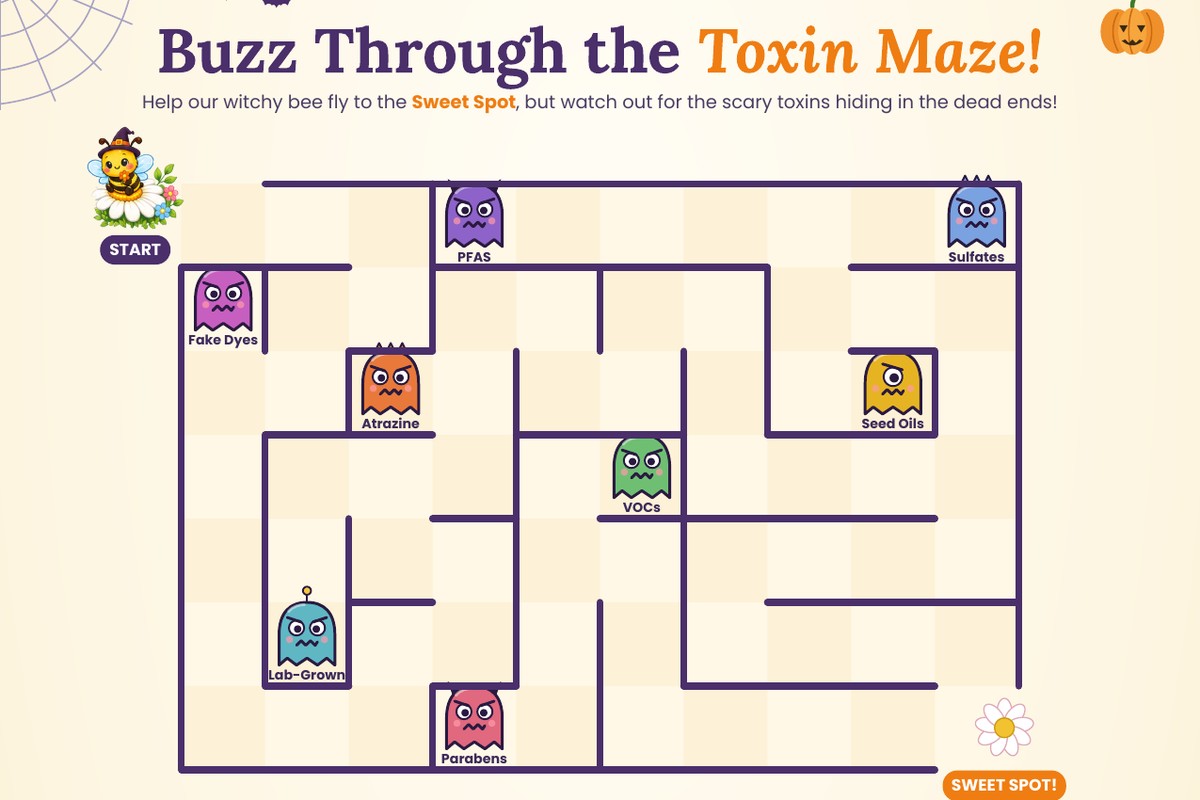
Kids learn best through play. We created free, printable Halloween activities, a Toxin Maze and a Word Search, to help parents and teachers talk about everyday toxins and safer swaps in a fun, non-scary way. You'll find them on our Educational Resources page.
A little encouragement
You don't have to do everything, and you don't have to do it all at once. Every swap you make, whether it's a new water bottle, a natural-fiber shirt, or a snack from home, lowers the load a little. Those small choices, made early and repeated daily, are one of the kindest things we can do for the kids we love.
Learn more
- NIEHS: Chemicals in personal care products and the timing of puberty
- IDEA Health & Fitness: Sportswear contains high levels of BPA
This post is for general education only and is not medical advice. Talk with your child's pediatrician about specific health questions. Some links may be affiliate links. Sweeter Things LLC may earn a commission if you purchase through these links, at no additional cost to you.